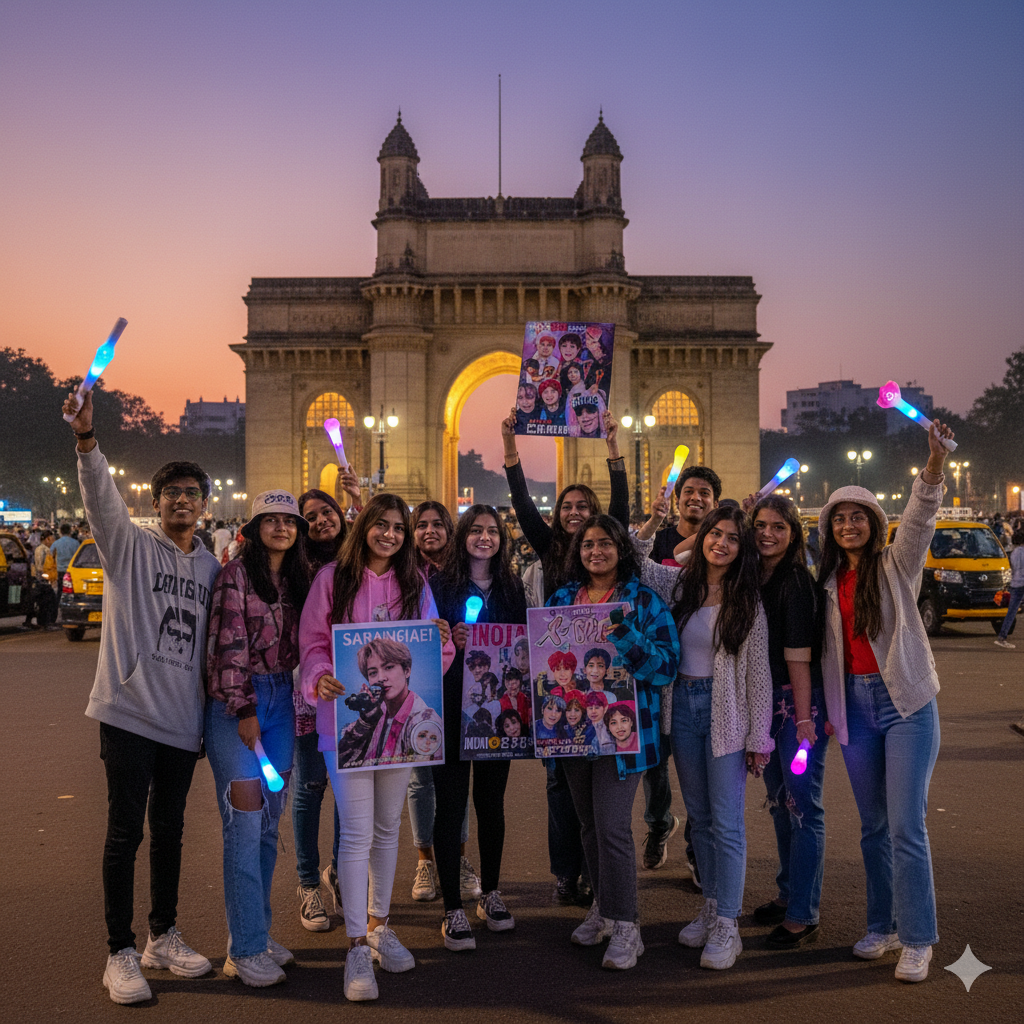
K-pop isn’t just music anymore—it’s a cultural revolution. From Seoul to São Paulo, and now to New Delhi, the genre has infiltrated every corner of the world. By 2025, India has emerged as one of the fastest-growing K-pop markets, driven by a young, digital-savvy generation eager for global sounds. But how big is K-pop really in India? Let’s dive into the phenomenon.
Back in the early 2010s, K-pop in India was limited to a niche community. Fans relied on bootleg CDs or international friends to access albums. Things changed dramatically around 2016–2017 when BTS and BLACKPINK exploded onto the global scene. Their music videos trended on YouTube India, sparking curiosity among Indian youth.
The COVID-19 pandemic acted as a booster shot—locked at home, millions of young Indians discovered K-pop through streaming platforms, creating a surge in fan base growth. By 2025, fandoms are thriving not just in metros but also in smaller cities.
India’s Gen Z and Gen Alpha are the heartbeat of K-pop fandom. Teenagers in Bangalore, Delhi, and Mumbai are as invested in idol comebacks as their peers in Seoul or Los Angeles. Fan cafes, WhatsApp groups, and Twitter trends ensure idols are never far from conversations.
Social media plays a crucial role—Instagram fan edits, TikTok dance challenges, and fan art have become part of the cultural fabric.
What once felt like a dream is now reality—K-pop concerts in India. The concerts can boost the popularity of K-Pop in India too much. Smaller showcases first tested the waters, but by 2025, top-tier groups have recognized India’s potential. Stadiums in Mumbai and Delhi have hosted multi-thousand attendance events.
The ripple effect of K-pop events is significant and multifaceted. Hotels, local transport systems, and various businesses often experience a thriving boom during concert weekends, as they cater to an influx of tourists and fans eager to participate in these electrifying experiences.
Fans travel from all corners of the country to attend, which not only showcases their passion for the genre but also serves as evidence of India’s readiness for large-scale K-pop events. The economic benefits extend beyond just the concerts themselves, signaling a broader cultural embrace and engagement with international music trends in the region.
K-pop Fan Communities in India:
ARMYs, BLINKs, ONCEs, and CARATs dominate India’s fan scene. Beyond streaming, these communities organize charity drives,
birthday projects for idols, and even billboard advertisements in Indian cities.
K-pop in India isn’t passive consumption—it’s active cultural participation.
YouTube remains the gateway, with K-pop MVs regularly trending in India. Spotify and Apple Music saw a spike in K-pop playlist consumption between 2020–2025. Even local apps like Gaana and JioSaavn now feature dedicated K-pop sections.
For the first time, some Indian radio stations are adding K-pop tracks to their playlists, signaling mainstream recognition.
In 2025 we also witnessed the First Indian social media website dedicated to Indian K-Pop Fans.
Indian companies aren’t blind to the craze. Cosmetic brands, tech companies, and fashion startups have started tapping into K-pop idols for endorsement campaigns. Imagine a BTS member in an Indian ad—it’s no longer impossible.
These collaborations are reshaping the marketing landscape in India.
K-dramas opened the doors, but K-pop cemented Korea’s cultural impact. Korean Cultural Centers in India have seen skyrocketing enrollments in Korean language courses.
At the same time, K-pop artists have shown interest in Indian culture—from Bollywood-inspired choreography to idols spotted wearing Indian jewelry.
Gone are the days when Indian entertainment media ignored K-pop. Today, leading newspapers cover comebacks, and television hosts reference idol groups. Music channels air K-pop chart shows, while digital portals dedicate entire sections to Hallyu.
Official albums, photocard trades, and lightsticks are in huge demand. Pop-up stores in malls attract thousands of fans, while online sellers thrive. Even unofficial fan-made merch—stickers, posters, keychains—has created a booming sub-economy.
Dance cover groups are the unsung heroes of India’s K-pop revolution. From flash mobs in shopping malls to inter-college competitions, K-pop choreography has inspired a whole generation of dancers.
YouTube and Instagram creators showcase covers that often go viral, sometimes even catching the attention of Korean idols themselves.
The potential for crossovers is massive. Several Indian producers have already hinted at collaborations with Korean labels. Imagine a Bollywood-K-pop fusion track dominating both Indian weddings and Korean clubs—it’s only a matter of time.
Despite its rise, K-pop in India faces hurdles. The language barrier still limits older demographics. Misconceptions about idol culture persist, and high ticket prices restrict many fans from attending live shows.
But if streaming growth and fan enthusiasm are indicators, these barriers are slowly crumbling.
By 2030, India could host annual K-pop festivals similar to KCON. With a population exceeding 1.4 billion, the potential market is enormous. Record labels are eyeing India not just as an audience but as a creative partner.
The coming years might even see Indian idols debuting in Korean groups.
K-pop in India in 2025 is no longer a question—it’s a fact. With concerts, fan clubs, merchandise markets, and cross-cultural exchange booming, India has cemented itself as one of K-pop’s fastest-growing hubs.
It’s more than music; it’s a cultural bridge bringing India and Korea closer than ever before.
1. When did K-pop in India become popular become popular?
K-pop started gaining attention around 2016, with BTS and BLACKPINK being the key drivers. The real boom happened during the pandemic.
2. Which K-pop group has the biggest fanbase in India?
BTS leads by a wide margin, but BLACKPINK, Stray Kids, and SEVENTEEN are rapidly growing.
3. Has India hosted K-pop concerts?
Yes, by 2025, few concerts have been hosted in cities like Delhi and Mumbai, attracting thousands of fans.
4. Do Indian fans buy official K-pop merchandise?
Absolutely. Lightsticks, albums, and photocards are in huge demand, and many fans also engage in trading communities.
5. What is the future of K-pop in India?
The future of K-Pop in India looks bright—larger concerts, brand collaborations, and even Indian idols debuting in K-pop groups are expected in the near future.
IntroductionHistory of k-Pop Award: MAMA and MMAMAMA 2025: What to ExpectMMA 2025: What to ExpectComparison…
We present a comprehensive guide to September 2025 K-Pop comebacks, debuts, and major releases. Below…
Lim Jae Wook and His Role in The StrayTimeline: Illness, Announcement & Final DaysReactions and…
The BTS Comeback Announcement That Shook the InternetTwo Months in the U.S.: A Creative RetreatReturn…
This website uses cookies.